
System design, installation, repair, spring startup, and fall winterization -- across Durango and La Plata County. One crew handles the system from the meter to the last emitter.
01
System design
Zones planned around sun, wind, slope, and plant type -- not a uniform grid. Hydrozoning keeps thirsty planting off the same valve as xeric beds. A system designed for the site uses less water and loses fewer plants.
02
Installation
New systems and expansions, trenched to depth, with assemblies sited so they can actually be drained and serviced when the season ends.
03
Repair
Line breaks, valve and solenoid failures, controller faults, sheared heads, and freeze damage. Common parts carried on the truck.
04
Drip and Conversion
Spray-to-drip conversion for beds and shrubs. Water delivered at the root rather than thrown into Colorado wind.
05
Spring Startup
Main charged slowly, zones run one at a time, heads checked and adjusted, controller reprogrammed for the season. Winter damage surfaces here, not in June.
06
Fall Winterization
Compressed-air blowout through every zone until lines run dry, assemblies drained and isolated, controller shut down. The most important visit of the year.
An irrigation system at 6,500 feet spends roughly half the year full of water and the other half needing to be completely empty. Almost every expensive irrigation failure in this county traces back to that transition being mishandled or skipped.
Water expands when it freezes. A pipe, valve, or assembly with water still in it splits — and you do not find out in November. You find out in April, when the system comes on and a lawn turns into a spring. Frost depth here runs deep enough that shallow-buried laterals and above-ground assemblies are both at risk.
A blowout costs a fraction of replacing failed components. It is the cheapest insurance on the property.
The other constraint is water itself. Roughly 19 inches of annual precipitation means irrigation is not topping up a wet climate. It is the entire water budget for anything that is not native. Systems designed for a wetter region waste most of what they deliver to wind, evaporation, and runoff. Proper design and hydrozoning make a measurable difference.
━ Before & after
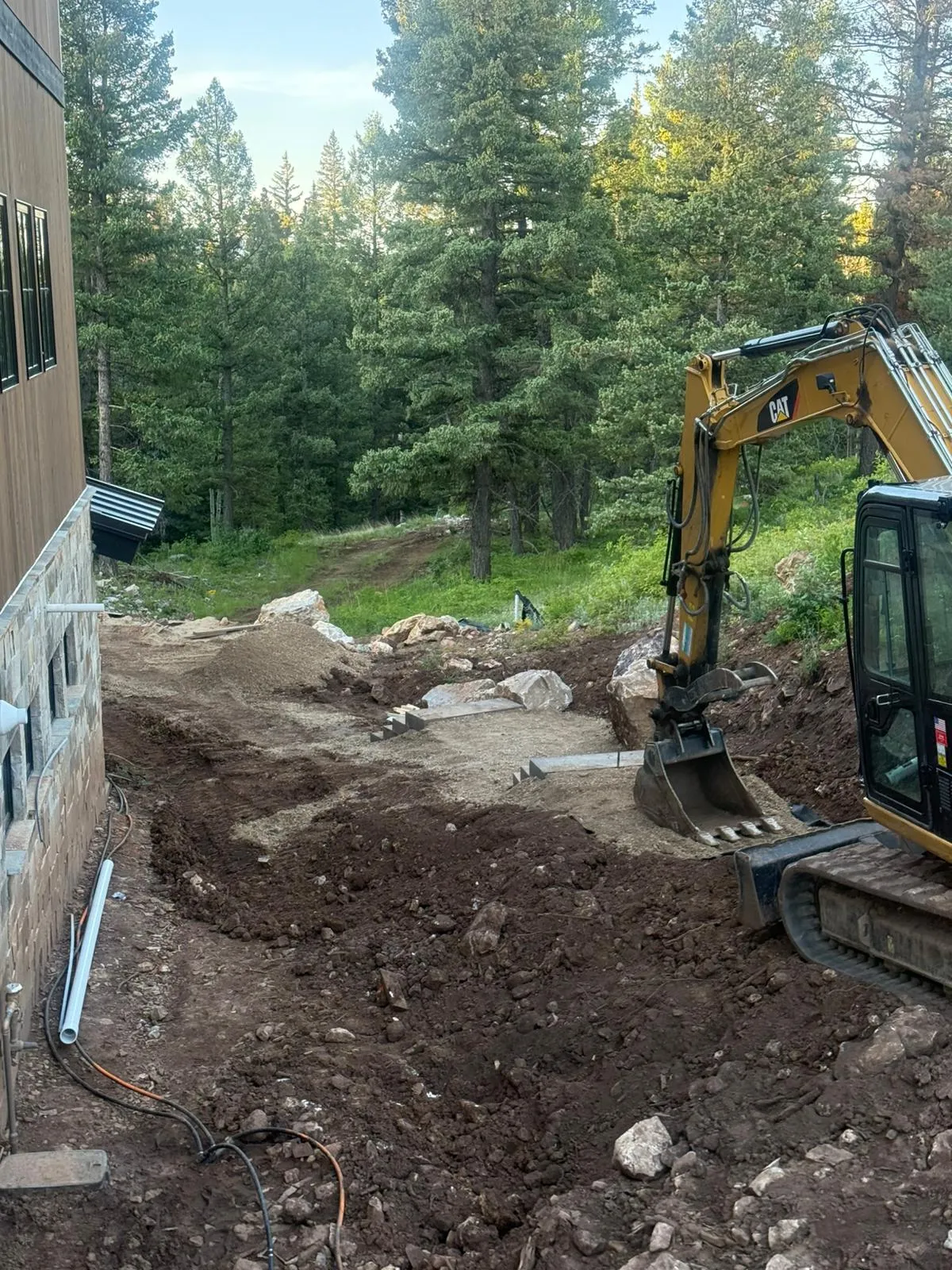
Spring Startup (April to May)
Main charged slowly, zones tested one at a time, heads checked and adjusted. This is when winter damage surfaces. Existing clients are scheduled first.
In-Season Service (May to September)
Schedule adjustments as heat peaks, repairs as they come up, coverage audits. Watering restrictions may apply in dry years. We adjust programming around them.
Fall Winterization (September to October)
Compressed-air blowout through every zone until lines run dry. The most critical visit of the year. The fall route closes before the first hard freeze -- not after it.
We handle
We refer out
Startup and winterization routes run on set schedules. Existing clients are booked first, and the fall route closes before the first hard freeze. Get on the list before October.