Plowing to the marked edges, including long and steep private drives. Berm clearing where the county plow blocks your entrance.
02
Walkways and Entries
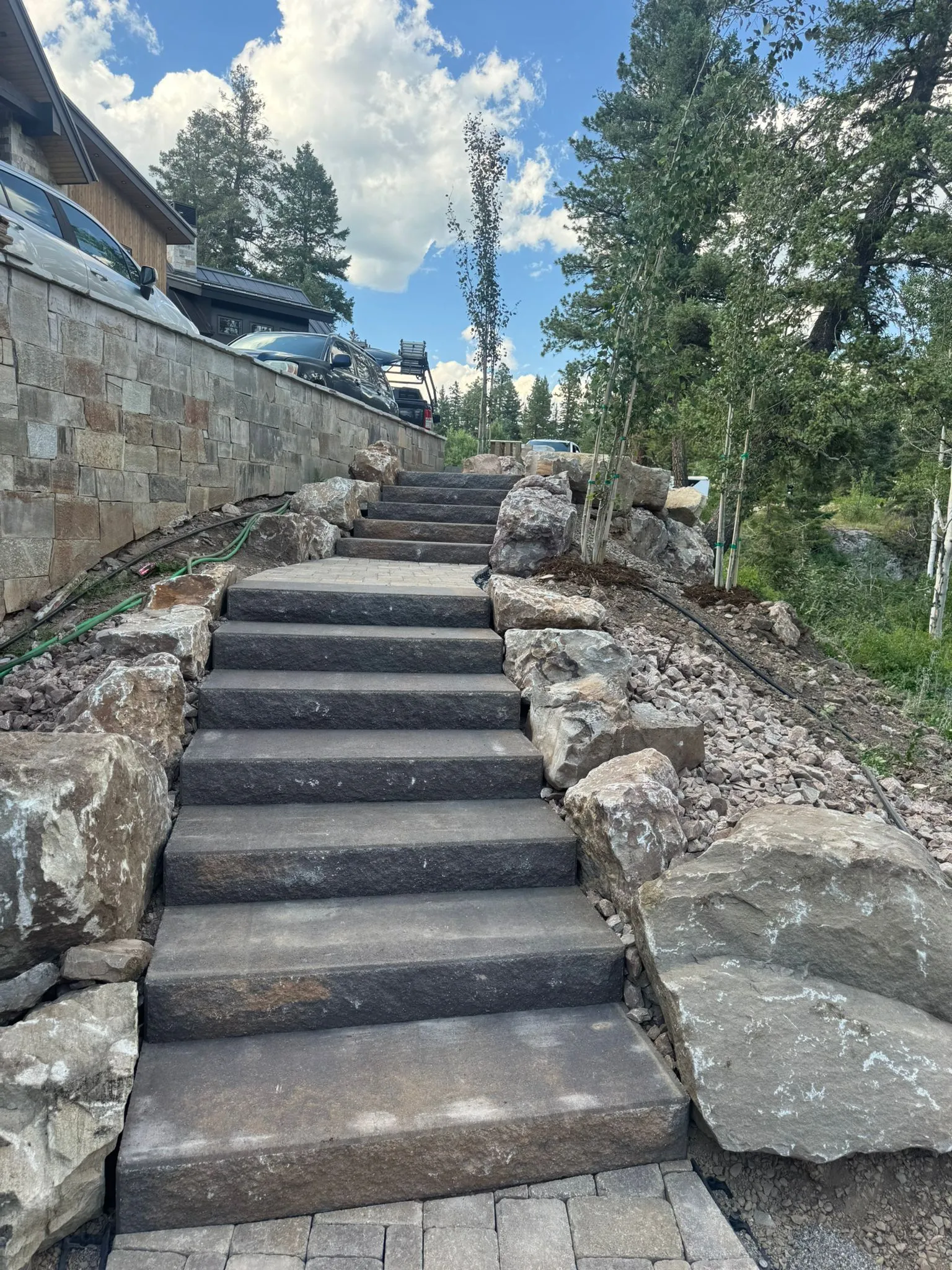
Paths, steps, decks, and entries cleared to the surface. The areas where slips actually happen.
03
Commercial lots
Parking areas, fire lanes, and accessible routes cleared on a defined sequence through the storm.
04
De-icing
Material selected for temperature and for what it is landing on. Applied where it is needed, not broadcast across every surface.
05
Snow relocation
Stack points planned before the season so meltwater does not run back across cleared surfaces. Hauling off where there is nowhere sensible to put it.
06
Roof-shed clearing
Metal roofs dump their load onto whatever is below. Repeat clearing at shed points and around entries.
We know where
your edges are.
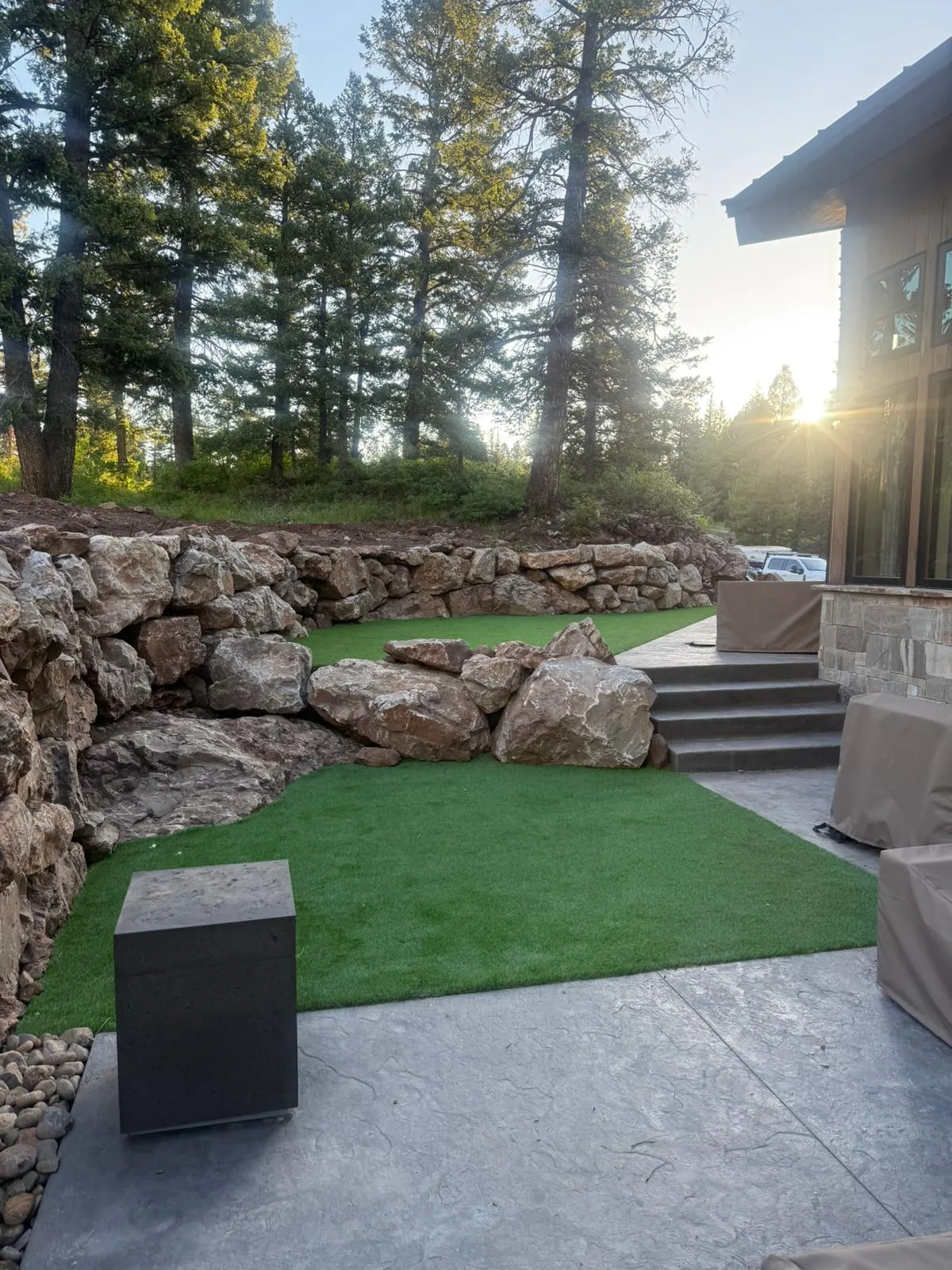
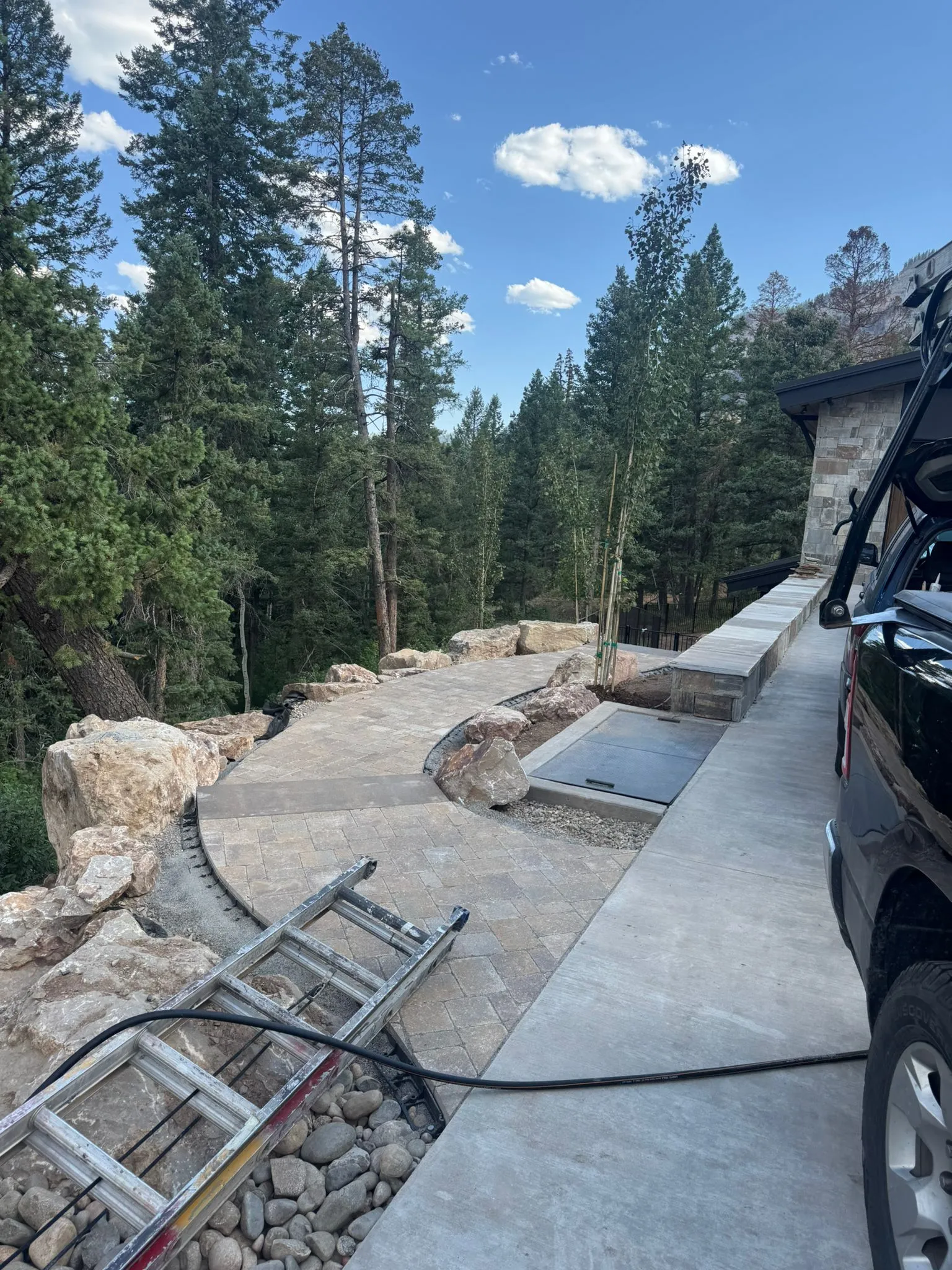
Most of the spring hardscape repair we do in this county is plow damage. A blade that does not know where a flagstone edge, a boulder, a valve box, or a low retaining wall sits will find all of them — under two feet of snow, at four in the morning.
On properties we built, we already know the layout. On properties we did not, we walk the site and mark hazards in the fall before the first snow: drive edges, culverts, irrigation heads, stone borders, anything a blade could catch. That marking pass is part of the fall visit, included.
Stack points get planned before the season, not decided by whoever is driving. Snow piled over a xeric bed, against a foundation, or somewhere it drains back across the drive and refreezes creates problems that outlast the winter.
The cheapest plow of the season is the one that does not cost you a stone wall in April.